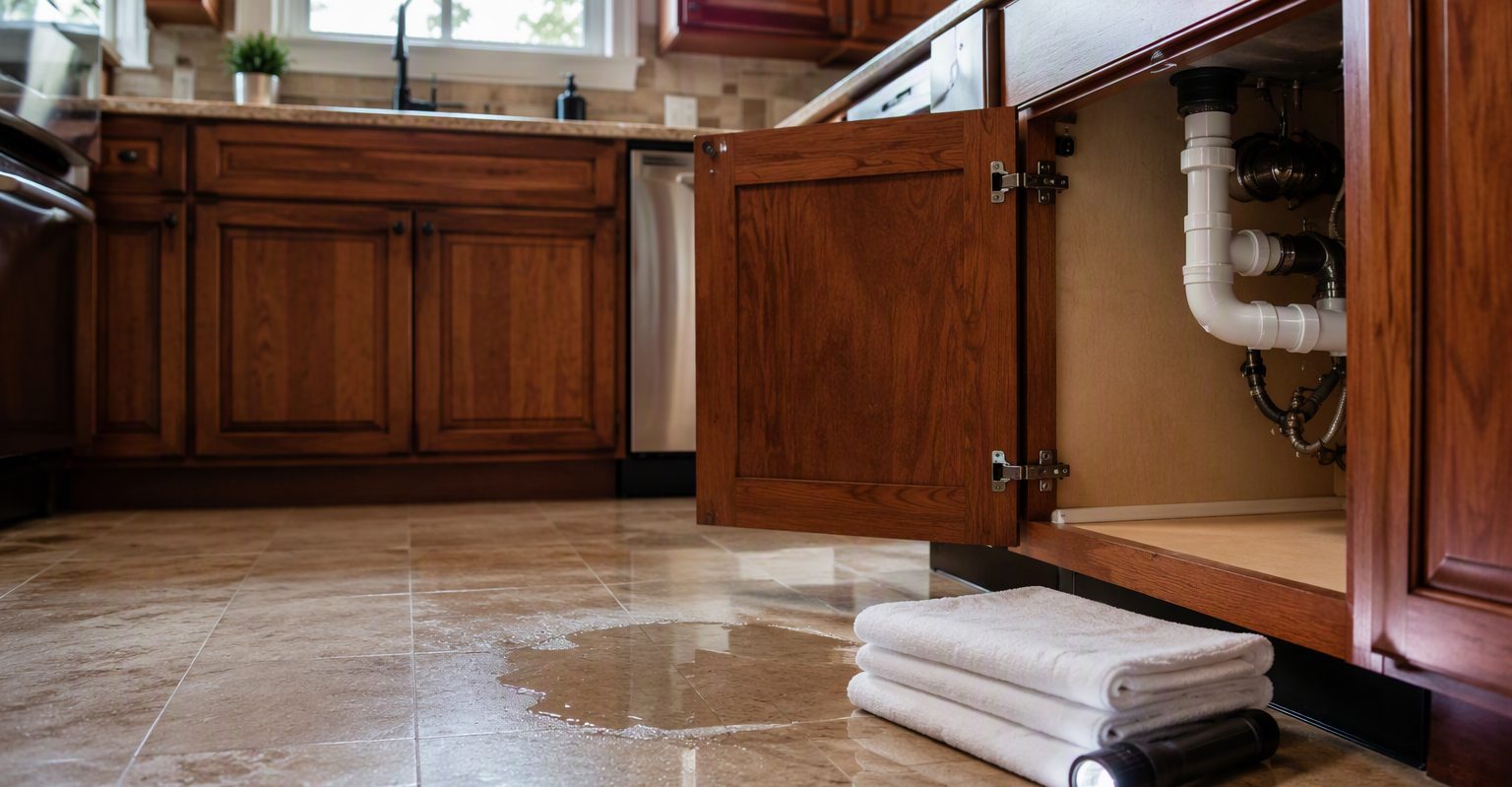
A supply line under full pressure moves hundreds of gallons an hour. By the time you’ve found the towels, the water has already found the baseboards, the cabinet toe-kicks, and the gap where the flooring meets the wall. The first hour after a burst pipe isn’t about cleanup — it’s about deciding whether this stays a drying job or becomes a rebuild. Here’s the checklist, in the order that actually matters.
Minute one: kill the water
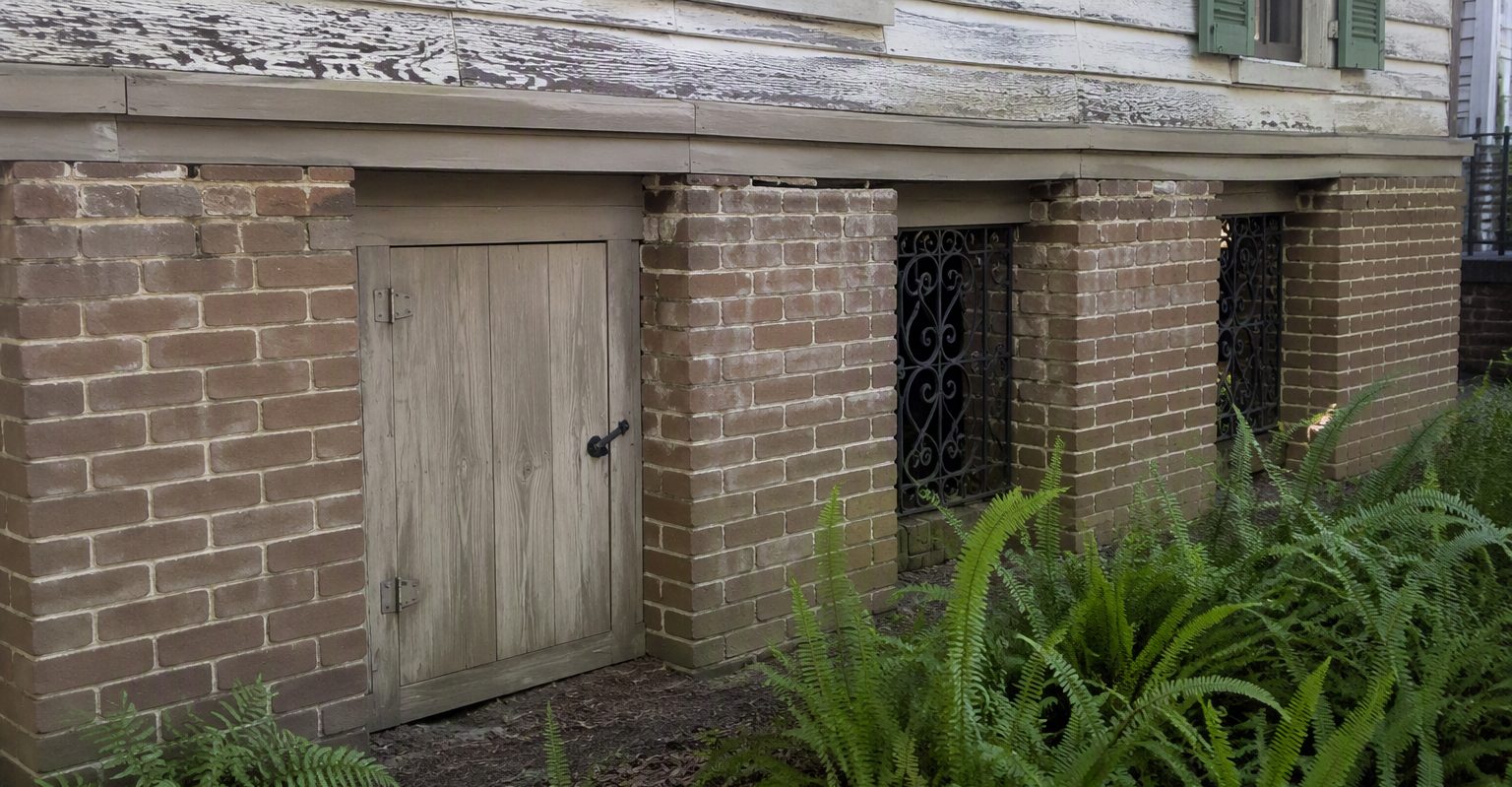
Not the towels — the shutoff. Every gallon you don’t stop is a gallon you’ll pay to remove. The main shutoff in most Savannah-area homes is where the supply enters: a garage wall, the crawlspace, or the street-side box. Turn it clockwise until it stops. If the failure is the water heater, its cold supply valve (right-side inlet, top of the tank) works without killing water to the whole house. If you take one thing from this article: go find your main shutoff today, while the house is dry.
Minute five: make it safe
Standing water near outlets or a submerged power strip is an electrical hazard — kill the breaker to the affected rooms before you wade in. Ceiling bulging with water? Stay out from under it; a saturated drywall panel holds surprising weight and gives no warning. And if the water came from anywhere but a clean supply line — a drain, the toilet, outside — treat it as contaminated and keep kids and pets clear.
Minute ten: document before you touch
This is the step everyone skips and everyone regrets. Photograph the failed line, the standing water, the waterline on every wall, and every wet room — wide shots and close-ups. Sixty seconds of phone photos is the foundation of your insurance claim, and once cleanup starts, the evidence is gone. Your carrier will ask what happened and how far it spread; your camera roll is the answer.
Minute fifteen: make the call
Now — not after you’ve shop-vacced for two hours. Here’s why: extraction equipment removes water at gallons per minute, and drying equipment has to run three to five days. Every hour of DIY delay is an hour added to the wet clock, and the wet clock is what grows a small loss into a big one. Tell us where the water is, how much, and when it started — dispatch starts on that call.
While the crew rolls: the useful stuff
Move dry valuables and furniture out of the wet zone. Lift curtains and drapes off the floor. Aluminum foil or coasters under furniture legs prevent the stain transfer that ruins both the leg and the carpet. Prop up wet cushions. Don’t run the household air system if water came up from a drain — you don’t want to circulate that air. And don’t start tearing out baseboards or drywall — removal decisions come after the moisture map, and premature demolition muddies the claim file.
What happens when we arrive
The moisture map comes first — meters trace the water into walls, under floors, and along the slab, because the visible puddle is never the whole loss. Then extraction, then the drying plan in writing: what equipment, where, and the readings we expect day by day. You’ll know the scope and the number before equipment runs. That’s the whole first hour: shutoff, safety, photos, call, prep. Do them in that order and the burst pipe is a bad afternoon, not a bad season.