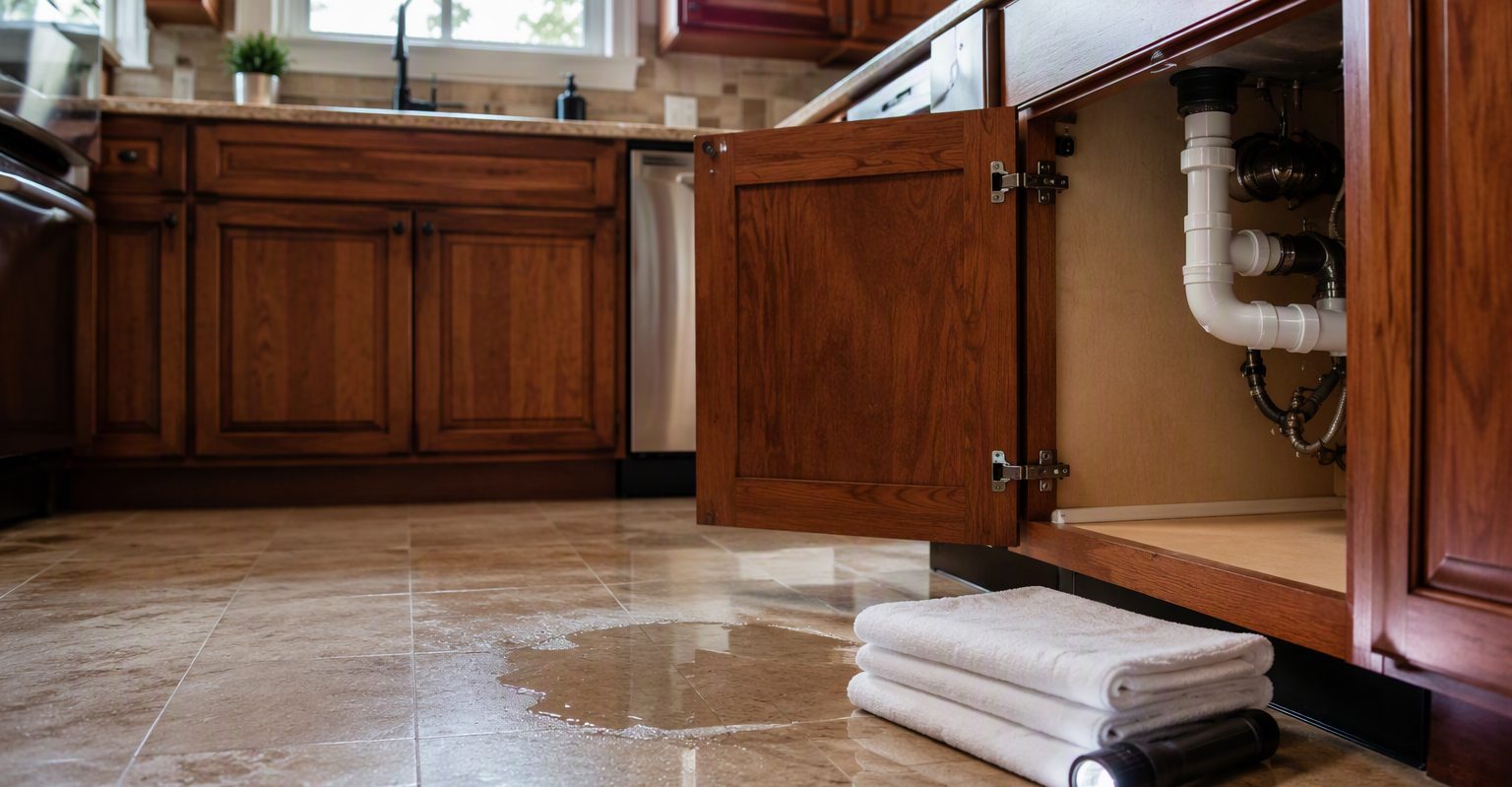
The expensive water losses we walk into rarely started as floods. They started as a drip — a supply line fitting weeping one drop a minute, a toilet seal failing silently under the floor, an icemaker line misting behind the refrigerator. Nobody calls about a drip. Everybody calls about what the drip became. Here’s the timeline of how that happens, so you can interrupt it at the small stage.
Day one: the invisible stage
A slow leak inside a wall or under a floor shows nothing. The water isn’t idle, though — it’s wicking into drywall paper, soaking insulation, and spreading along the path of least resistance, which is always farther than intuition says. A pinhole releasing a cup of water an hour puts three gallons a day into your structure. This stage can run for weeks, and it’s the smallest bill in the whole story: tighten the fitting, dry the cavity, done.
Week two: the structure starts keeping score
Wood holds moisture like a sponge with a memory. The bottom plate of the wall climbs in moisture content, subfloor edges swell, and drywall paper — the food source — stays damp around the clock. This is the stage where secondary damage starts: not the water itself, but what damp wood and paper grow in coastal warmth. The fix is still modest — open the cavity, dry it, repair — but the word “removal” has entered the chat.
Month two: the confession stage
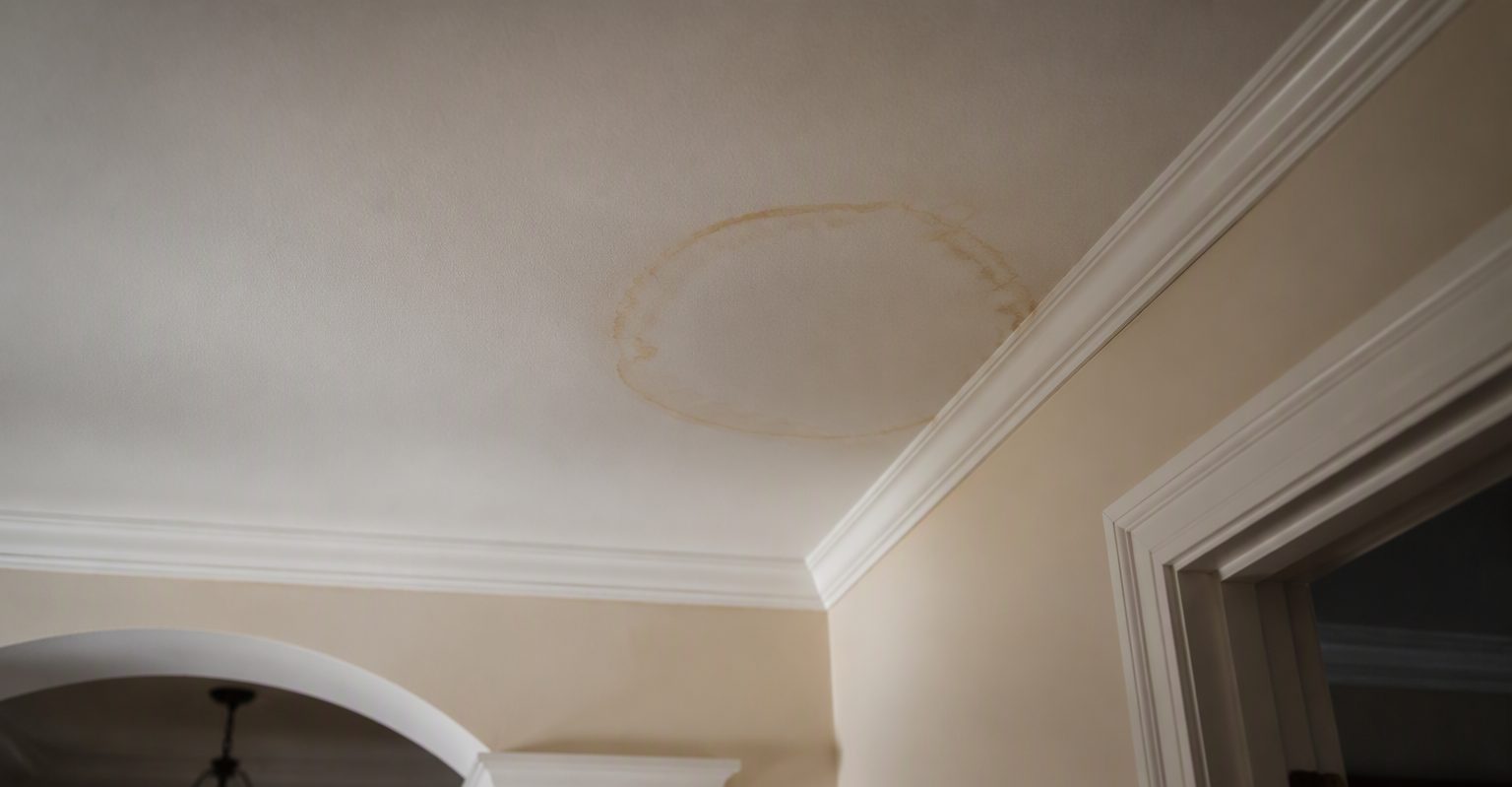
Now the leak announces itself: a stain blooming on the ceiling, paint blistering, baseboards pulling away, a floorboard cupping, a door that suddenly sticks. Here’s the cruel part — by the time a stain is visible, the material behind it has been wet for weeks. The stain isn’t the start of the problem; it’s the problem’s press release. The job now involves removal of damaged material, drying, treatment, and rebuild — real money, but still a fraction of the next stage.
Month six and beyond: the rebuild stage
Long-term moisture rots framing and subfloor. Floors dip. Trim loses its grip on softened wood. The repair is no longer a patch — it’s carpentry, sometimes structural, always with a larger material removal footprint than anyone wanted. The drip that would have cost a fitting and a service call has become a five-figure line item. We see this exact arc in older Savannah homes every month — the stain someone meant to call about, that waited one season too long.
The early-warning system you already own
Your water meter is the simplest leak detector ever made: turn off every fixture in the house, watch the meter’s low-flow indicator for ten minutes — if it moves, something somewhere is using water, and it’s not you. Once a month, touch the shutoff valves under every sink and behind every toilet (they corrode in place here), look at the supply lines for bulges and rust rings, and pull the refrigerator out far enough to see the floor behind it. Ten minutes a month buys you the small stage.
Found something? The order of operations
Shut off the local supply, photograph what you see — even if it’s just a stain — and call. A moisture meter reading tells us in one visit whether the stain is old and dry or active and wet, and that single fact decides the size of the job. If it’s active, extraction and drying start while it’s still a drywall patch instead of a rebuild. Small leaks don’t stay small; they just stay quiet. The call is the interruption.